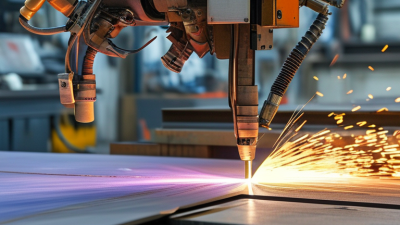
Why Choose a Plasma Tube Cutter for Your Business?
A Plasma Tube Cutter can help a fabrication business turn straight tube into accurate, repeatable parts with fewer manual layout steps. In a busy shop, that can mean cleaner joints, steadier production, and less time spent correcting mismatched ends. The machine guides a cutting torch along programmed paths, shaping round, square, or rectangular profiles for frames, supports, and equipment. Small details matter: a consistent notch can make two tubes meet with less gap before welding. That saves time.
The business case depends on the work, not the machine’s headline speed. Tube diameter, wall thickness, material, cut complexity, and production volume all affect performance. A buyer should compare the cutter’s rated capacity with real jobs, then review sample cuts and setup requirements. Ask about software, extraction, consumables, service access, and operator training, too. These details influence daily uptime and finished-part quality. Still, automation is not a cure for poor drawings or rushed inspection. A badly prepared file can produce a very precise mistake. It is worth checking how the machine handles short parts, angled cuts, and frequent changeovers before committing. For a shop with recurring tube work, the right Plasma Tube Cutter may improve flow and consistency. For occasional jobs, its cost and learning curve may outweigh those gains. The best choice is the one that fits verified production needs, with room for honest reassessment.
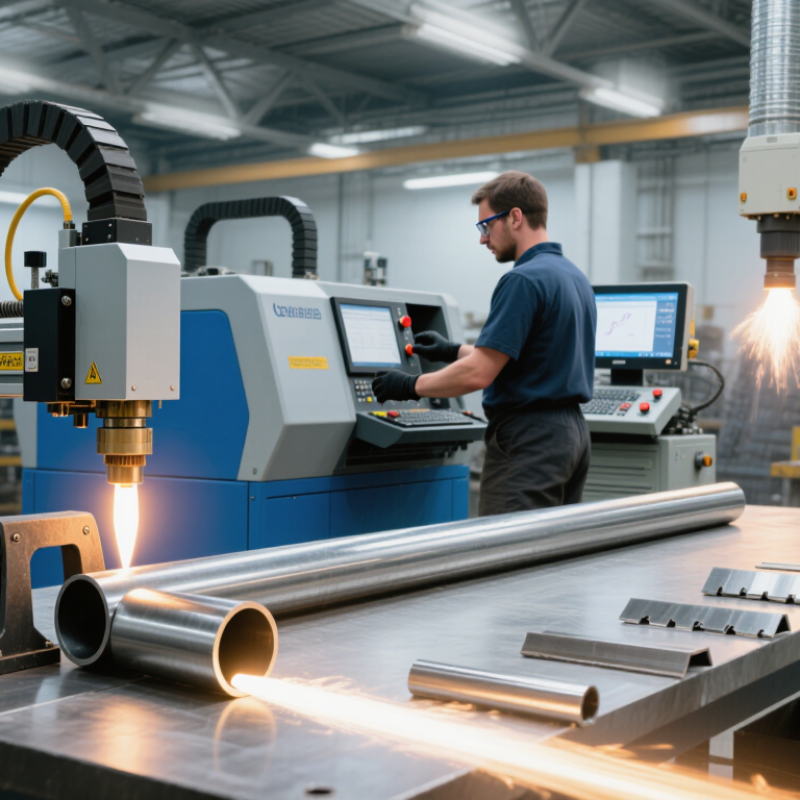
Plasma Cutting Defined: Ionized Gas Jets Can Exceed 20,000°C
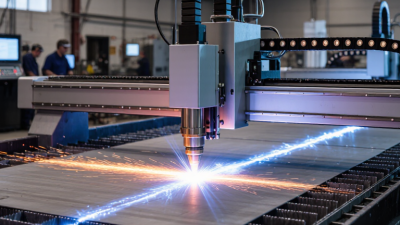
Plasma cutting is not a flame with a dramatic name. It constricts an electric arc through a nozzle, turning gas into a fast, ionized jet. TWI’s technical guidance describes plasma-arc temperatures around 20,000°C; in some operating conditions, the hottest zone can exceed that figure. The heat melts a narrow path, and the gas jet pushes molten metal out of the kerf.
Small zone. Intense heat.
Actual results still depend on gas choice, torch condition, and material thickness.
The scale of metalworking is substantial: the World Steel Association’s World Steel in Figures 2024 reports 1,892.2 million tonnes of crude steel production worldwide in 2023.
For tube-cutting businesses, plasma can make clean crosscuts and shaped openings without heating an entire workpiece. Picture a steel tube rotating beneath a torch as it cuts a branch connection.
But speed is not guaranteed. Thin walls may distort, and a worn consumable can leave a rough edge that needs extra finishing. Test cuts matter; skipping them may save minutes, then cost more in rework.
How the Process Works: Electrical Arc, Gas Flow, and CNC Control
A plasma tube cutter forms an electrical arc between the torch electrode and the workpiece. The arc ionizes the flowing gas, creating a hot, conductive plasma jet. The American Welding Society’s Welding Handbook, 10th edition, describes plasma-arc temperatures reaching roughly 20,000°C. The concentrated heat melts a narrow path, while the gas stream ejects molten metal from the cut. Clean edges depend on matching gas type and flow to the material and wall thickness. Too much or too little flow can affect cut quality. Small details matter.
CNC control coordinates torch movement with tube rotation, keeping the arc on the programmed path around the curved surface. The system can also adjust torch height to account for variations in the tube. This helps produce repeatable holes, slots, and angled cuts across multiple parts. ISO 9013:2017 classifies thermal-cut quality using measures such as perpendicularity tolerance and surface profile. Those measures offer a more useful inspection basis than appearance alone. Still, setup data is not the whole story: worn consumables, tube movement, or a poorly aligned torch can spoil an otherwise accurate program. A test cut helps reveal these issues before production.
Why Choose a Plasma Tube Cutter for Your Business? - How the Process Works: Electrical Arc, Gas Flow, and CNC Control
| Process Stage | What Happens | Key Equipment or Input | Business-Relevant Result |
|---|---|---|---|
| Material and job setup | The operator selects a suitable cutting process and sets the tube, profile, material, and job parameters. Plasma cutting is intended for electrically conductive metals. | Conductive workpiece, cutting plan, material and thickness settings | Correct setup helps match the job to the cutter’s capacity and supports consistent production. |
| Electrical arc initiation | An electrical arc is established between the torch electrode and the workpiece, creating the heat needed to form plasma. | Power supply, torch electrode, workpiece, and arc-start system | The concentrated heat enables localized cutting rather than heating the entire part. |
| Gas ionization and plasma formation | Gas passing through the torch is heated and ionized by the arc, forming an electrically conductive plasma stream. | Gas supply, torch, nozzle, and controlled gas flow | The gas and arc work together to create a focused cutting stream; the appropriate gas depends on the machine and application. |
| Melting and material removal | The plasma stream melts metal along the cut path, while the gas flow helps expel molten material from the cut. | Plasma arc, gas flow, torch height, and cutting speed | Cut quality depends on the combined settings, consumable condition, material, and thickness. |
| CNC path control | A CNC controller moves the torch along programmed coordinates and can coordinate motion with the tube’s rotation or position. | CNC controller, drive system, tube positioning or rotary axis, and part program | Programmed motion supports repeatable shapes and helps reduce dependence on manual torch guidance. |
| Cut sequencing and nesting | Cut paths can be arranged in a programmed sequence, with layouts planned to use available tube length efficiently. | CAD/CAM software and CNC job files | Careful programming can reduce avoidable offcuts and simplify repeat production; actual savings depend on the part design and workflow. |
| Consumable and system maintenance | Electrodes, nozzles, and other torch consumables wear during use and need inspection and replacement according to operating conditions. | Torch consumables, clean gas supply, inspection, and maintenance schedule | Maintaining the torch and gas system helps preserve cut consistency and limits interruptions caused by worn or contaminated components. |
| Suitable applications and limits | Plasma tube cutting can process conductive metals such as carbon steel, stainless steel, and aluminum, subject to machine specifications. It does not cut nonconductive materials such as wood or plastic. | Material type, wall thickness, machine capacity, and required edge quality | It is a practical option when the work is compatible with plasma and the required cut quality matches the process; capacity and finish vary by setup. |
Materials and Capacity: Cutting Ranges Depend on Metal and Amperage
A plasma tube cutter’s usable range is not determined by amperage alone. Mild steel, stainless steel, and aluminum conduct heat differently, so the same settings may produce different results. Wall thickness matters, too. A cutter might pierce a thick section but leave a rough edge if the torch moves too quickly. Tube diameter and shape can also affect torch access, especially near a joint or curved surface.
Check the manufacturer’s rated cutting capacity, then compare it with the clean-cut thickness your work actually requires. Amperage, duty cycle, air quality, and torch consumables all influence performance during a full shift. Small details matter. A worn nozzle or damp compressed air can make an otherwise suitable machine cut poorly.
Test it first. Use scrap tubing with the same metal and wall thickness, and inspect the edge for dross, bevel, and heat distortion. Cutting charts are useful, but they can feel more certain than real shop conditions. Allow room for imperfect results when estimating capacity.
Business Benefits: Typical Kerf Widths Can Be Around 1–3 mm
A plasma tube cutter can make everyday fabrication more predictable, especially when parts need clean, repeatable edges. Typical kerf widths can be around 1–3 mm, but this is a working range, not a guarantee. Tube material, wall thickness, cutting speed, torch height, and consumable condition all affect the result.
That difference matters when a tube must fit a bracket or meet another cut edge. A wider kerf removes more material and may leave a bevel or rough edge that needs extra cleanup. A narrow kerf can preserve more stock, but only when the machine is properly set up. A useful starting point. Run a test cut on the same material and thickness, then measure the cut rather than relying on the displayed settings.
In regular production, operators can record settings that produce dependable results and check nozzle wear before it causes inconsistent cuts. Still, the 1–3 mm figure should not be treated as a precision specification. Plasma cutting can save time on many tube jobs, yet tight-fit parts may need a slower process, added machining, or a design allowance. The shop floor can be less tidy than the drawing. That is worth planning for.
Why Choose a Plasma Tube Cutter for Your Business?
Business benefit: typical plasma kerf widths can be around 1–3 mm.
A relatively narrow kerf can help limit material removed during cutting. Actual kerf width varies with material, thickness, cutting speed, torch setup, and consumable condition.
Choosing a System: Compare Duty Cycle, Power, Consumables, and ROI
A plasma tube cutter should match the work you actually run, not just the thickest tube in your catalog. Check the duty cycle at the amperage you expect to use. A 60% rating generally allows six minutes of cutting in a ten-minute period under stated test conditions. That matters during a batch of long cuts. Frequent thermal stops can slow production, even when the machine’s peak power looks impressive.
Power affects cut capacity and speed, but the shop’s electrical supply and air system matter too. Confirm that the available voltage supports the required output. Use clean, dry compressed air; moisture can shorten consumable life and leave rough edges. Small details count. Ask suppliers to test sample tubes close to your typical wall thickness. A specification sheet may not reflect your actual setup.
Consumables deserve a practical comparison. Track electrode and nozzle replacement rates, cut quality, and cost per operating hour. Then include labor, downtime, scrap, installation, and energy in an ROI estimate. A lower purchase price may not stay lower if parts wear quickly. Be cautious with projected savings: early estimates are often optimistic. Run a short production trial and record real cutting time and replacement frequency. One imperfect test is still more useful than a confident guess.
Related Posts
-
China Top 10 Plasma Table Suppliers?
-
China Best CNC Metal Cutting Suppliers for Global Buyers
-
2026 Top CNC Plasma Tables for Sale Worldwide
-
10 Best CNC Plasma Cutters for Precise Metal Cutting?
-
The Future of Plasma Torch Technology Revolutionizing Industrial Applications
-

China Manufacturing Thrives Amidst US China Tariff Challenges With Best Cnc Plasma Cutter
English
Français