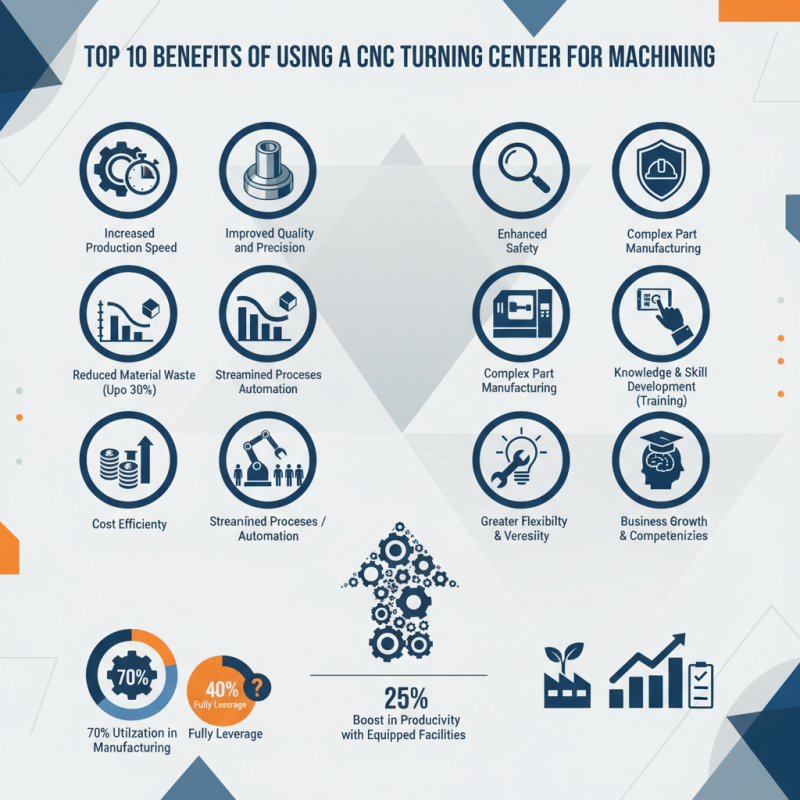
Top 10 Benefits of Using a CNC Turning Center for Machining?
The manufacturing sector continuously seeks efficiency and precision, making tools like the CNC Turning Center essential. According to reports, 70% of manufacturers now utilize CNC technology. This shift has improved production speed and quality. CNC Turning Centers streamline processes, reducing wasted materials by up to 30%.
However, not all companies maximize their benefits. A study revealed that only 40% of organizations fully leverage their CNC capabilities. With advancements in automation, operators still face challenges in mastering complex programming. This gap in knowledge can hinder potential gains.
Investing in training for team members ensures optimal use of the CNC Turning Center. Well-equipped facilities can boost productivity by 25%. The right strategies can lead to significant growth, but companies must reflect on their current practices to evolve. Embracing change is crucial in a competitive landscape.
Advantages of CNC Turning Centers for Precision Machining
CNC turning centers offer numerous advantages for precision machining. First, they provide high accuracy and repeatability. Research indicates that these machines can achieve tolerances as tight as ±0.001 inches, which suits various industries like aerospace and automotive. This precision minimizes the need for extensive manual adjustments, saving time and reducing human error.
Additionally, they enhance productivity. According to industry reports, CNC turning centers can operate up to 60% faster than traditional methods. This increased speed often leads to a shorter lead time for projects. However, high initial costs can be a concern. Not every business is ready for such an investment. It's essential to weigh the long-term gains against the upfront expenses.
Moreover, CNC technology supports complex geometries that are hard to achieve manually. Some companies hesitate to fully utilize these capabilities, fearing a learning curve. Training staff on advanced features is critical for maximizing the machine's potential. Overall, CNC turning centers have transformed precision machining, but businesses must approach their integration carefully.
Top 10 Benefits of Using a CNC Turning Center for Machining
This chart illustrates the top benefits of using a CNC turning center for machining, showcasing the high levels of precision, efficiency, and automation, which play a critical role in modern manufacturing processes.
Enhanced Efficiency Through Automation in CNC Turning
CNC turning centers are revolutionizing the machining industry. Automation plays a key role in enhancing efficiency. With advanced software and hardware, these machines reduce manual labor. This shift allows operators to focus on monitoring production quality. The result? Increased accuracy and consistency in finished products.
Moreover, automation can sometimes lead to over-reliance on technology. Operators must remain vigilant and understand the machine's capabilities. It is crucial to balance automation and human oversight. There are cases where machines malfunction, leading to costly production delays. Therefore, ongoing training is essential for operators to adapt to unforeseen issues.
The precision offered by CNC turning centers is impressive, but mistakes can occur. For instance, incorrect programming can lead to defects. Regular maintenance checks can prevent these issues. Operators should also be aware of the limits of their machines. Combining automation with attentive human involvement fosters better outcomes. Embracing this balance improves productivity and minimizes errors in the long run.
Improved Surface Finish and Quality Control in Machining
The CNC turning center is revolutionizing the machining industry, particularly in improving surface finish and quality control. Reports indicate that precision machining can reduce surface roughness by up to 75%. This not only elevates the aesthetics of a product but also enhances its functionality. Customers demand high standards, and the CNC turning center meets these expectations effectively.
High-quality surface finish significantly reduces the need for secondary operations. This saves time and labor costs. However, the challenge of maintaining consistent quality across batches remains. CNC machines are programmed for exact specifications, yet variations can occur due to wear and tear on tools. It's crucial to monitor tool performance closely to avoid costly mistakes.
With the right calibration, CNC turning centers can produce parts with tolerances as tight as ±0.01 mm. Achieving this requires regular maintenance and skilled operators. Even minor oversights can lead to defects. Thus, while CNC technology offers impressive capabilities, the human element remains vital for achieving the desired results. Ensuring that operators are well-trained can help bridge this gap for optimal performance.
Increased Production Flexibility and Customization Options
In today's manufacturing landscape, CNC turning centers offer remarkable production flexibility. They adapt seamlessly to varying design requirements. Whether it’s creating complex components or simple parts, these machines cater to diverse needs. Customization is a hallmark of CNC technology. Designers can modify specifications quickly. The speed at which alterations occur is impressive. However, this also requires constant vigilance in quality control.
One concrete example is small-batch production. Traditional methods struggle with such low volumes. In contrast, a CNC turning center handles this efficiently. It's also beneficial for prototype development. Engineers can test and improve designs faster than ever before. Yet, operators must remain skilled. Mistakes in program settings can lead to inefficiencies. A balance between creativity and precision is essential.
Think about personalized manufacturing. From automotive to aerospace, CNC technology opens new doors. Companies can produce tailored solutions for specific clients. But challenges arise. Not all operators are equipped to handle intricate requests. Continuous training is vital to maximize potential. The possibilities are vast, but execution always matters.
Reduction of Material Waste in CNC Turning Processes
CNC turning centers are a game-changer for machining. One major benefit is the reduction of material waste during production. Traditional methods often lead to excessive scrap. CNC turning processes are more precise. They waste less material due to their accuracy in cutting. Machine operators can adjust the program for different materials. This flexibility minimizes leftover waste.
When planning a project, consider the material type. Some materials are more cost-effective and produce less waste. It helps to calculate the required dimensions carefully. Accurate measurements can save time and resources in the long run.
Another tip is to keep up with maintenance. A well-maintained CNC turning center operates efficiently. Regular checks can prevent issues that lead to material loss. Operators should stay vigilant about changes in machine performance. This awareness helps in addressing problems before they escalate.
Top 10 Benefits of Using a CNC Turning Center for Machining - Reduction of Material Waste in CNC Turning Processes
| Benefit | Description | Impact on Material Waste (%) |
| Precision Machining | CNC turning centers provide high precision, reducing errors and minimizing material waste. | 20% |
| Repeatability | Consistent performance leads to lower scrap rates and optimized use of raw materials. | 15% |
| Material Optimization | Advanced software helps in planning cuts to maximize material usage. | 25% |
| Shorter Production Times | Efficiency gains lead to faster production cycles, less material wasted during setup. | 10% |
| Less Manual Intervention | Reduced operator error and decreased material waste due to manual mistakes. | 18% |
| Versatility of Materials | Ability to work with a variety of materials reduces the need for additional stock. | 12% |
| Waste Collection Systems | Integrated systems collect waste for recycling, minimizing disposal costs. | 22% |
| Improved Design Capabilities | Enhanced CAD/CAM integration allows for designs that minimize waste. | 30% |
| Cost Efficiency | Lower raw material costs due to reduced waste and optimized production processes. | 17% |
| Sustainability | Enhanced environmentally friendly production practices through waste reduction techniques. | 20% |
 English
  Français